







From Hell's Kitchen to Hollywood's Most Enduring Legend
Most Hollywood success stories start with a lucky break. Sylvester Stallone's started with a birth injury, a broken family, and a script he refused to sell for anything.
Today he's one of only a handful of actors to headline box-office hits across six consecutive decades — with a net worth estimated at around $400 million and two of the most iconic characters in cinema history (Rocky and John Rambo) that he created himself. But the road went through foster care, a bus station, and a decade of rejection so brutal most people would have quit.
Here's how Sylvester Stallone actually built it.
A Birth That Left Its Mark
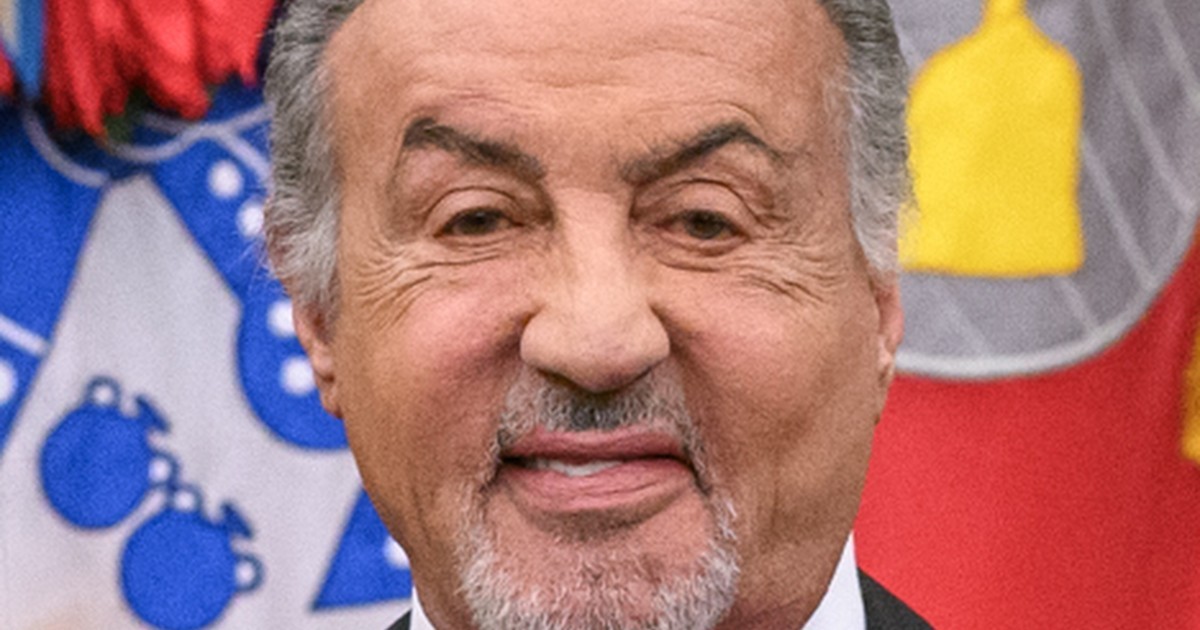
Born July 6, 1946, in Hell's Kitchen, New York, Sylvester Stallone entered the world with a forceps delivery that severed a facial nerve — leaving part of his lower lip, chin, and tongue permanently paralyzed. That's the source of the slur and the squint that became his trademark.
His parents divorced when he was young. His father, a hairdresser, and his mother, an astrologer, both remarried — and young Sly was shuffled between them, spending stretches in foster care and a Catholic boys' home. He was a bright but explosive kid in a world that had no patience for him.
Twelve Schools and a Fighting Instinct
School was a disaster. Stallone was expelled from so many schools he stopped counting — by his own estimate, a dozen different schools before tenth grade. Undiagnosed ADHD and dyslexia made the classroom feel like a cage. Teachers wrote him off; he wrote himself off too.
But he found two escapes: art and bodybuilding. He drew obsessively, and he trained relentlessly — winning regional bodybuilding titles as a teenager. The discipline of lifting gave him something school never did: proof that he could get better at something through pure effort.
He moved to New York City to study acting — and immediately discovered that nobody wanted him. He was too strange-looking, too thickly built, too "dumb" to be a leading man. So he did what broke actors do: he took whatever paid.
The Port Authority Years
For a stretch, Stallone was homeless in Manhattan — sleeping in the Port Authority Bus Terminal because it was warm and nobody kicked him out. He worked as a bouncer, an usher, a gym cleaner. He appeared in a low-budget soft-core film as "Stud" (he still jokes that the only line was "I can do that").
In the early 1970s he moved to Hollywood and ground through bit parts — a mugger in The Lords of Flatbush, a phone-order salesman in Death Race 2000. He was broke, in his late twenties, and getting nowhere. Then, on March 24, 1975, he watched a heavyweight fight that changed everything.
Rocky: The Script He Refused to Sell
That fight was Ali vs. Wepner — a no-name club fighter named Chuck Wepner went 15 rounds with Muhammad Ali, defying every expectation. Stallone went home and wrote the script for Rocky in three and a half days.
The script was hot. Studios wanted it — but they wanted a star like Robert Redford or Burt Reynolds to play Rocky, and they offered Stallone real money to sell: $350,000 for the screenplay, reportedly with a $100,000 acting fee on top. For a man sleeping in bus stations a few years earlier, it was life-changing money.
He turned it down. He'd keep the role, or the deal was off.
United Artists finally took the gamble with a tiny $1 million budget. Rocky (1976) went on to gross over $225 million worldwide, won the Best Picture Oscar, and earned 10 Academy Award nominations. Stallone — who wrote it, starred in it, and took almost nothing upfront — was suddenly the most famous underdog in the world, playing the underdog he'd actually been.
The lesson was set early: his creation, his face, his terms.
Rambo and the Action Empire
The 1980s belonged to Stallone. Rocky II (1979), Rocky III (1982) — which made Mr. T a star — and Rocky IV (1985) became box-office juggernauts. Meanwhile he took on a very different character: John Rambo.
First Blood (1982), based on David Morrell's novel, was a critical and commercial hit that turned a Vietnam veteran into one of cinema's great symbols. Rambo: First Blood Part II (1985) and Rambo III (1988) made the franchise a global phenomenon. For a decade, Stallone was the highest-paid action star on the planet — and he knew exactly what audiences wanted.
The Long Middle: Debt, Flops, and the Comeback
Then came the part of the story Hollywood loves to skip: the crash.
The early 1990s were brutal. Oscar (1991) flopped. Stop! Or My Mom Will Shoot (1992) was a legendary disaster — Stallone has said he did it for money. His spending had ballooned, his marriages were failing, and by the mid-1990s he was effectively broke, reportedly millions in debt. The "action star" era was fading, and so was he.
But Stallone had two things left: a work ethic and a willingness to pivot. He clawed back with Cliffhanger (1993) and Demolition Man (1993), then surprised everyone with a genuine dramatic turn in Cop Land (1997) — a role he took for almost nothing just to prove he could act.
Still, by the 2000s, Hollywood had written him off again. He was "old news." Then he did what he'd always done: he created his own vehicle.
The Expendables, Creed, and the Third Act
In 2010, Stallone wrote, directed, and starred in The Expendables — an action movie built around the aging action heroes Hollywood had discarded (Stallone, Statham, Willis, Schwarzenegger, Li, Lundgren). It grossed $274 million worldwide and spawned two sequels. The industry had to admit: the old guard was still the box office.
Then came the emotional masterpiece of his career. Rocky Balboa (2006) had already given Rocky a dignified ending. But Creed (2015) — with Stallone as an aging Rocky training Apollo Creed's son — earned him his first Oscar nomination in nearly four decades (Best Supporting Actor) and a Golden Globe win. He'd created the character in 1975 and was still making audiences cry with him in 2015.
Tragedy and Family
Stallone's personal life has been as hard as his career. His eldest son, Sage Stallone, died in 2012 at age 36 — a loss he still speaks about with visible pain. His second son, Seargeoh, is autistic; Stallone and his first wife raised him largely out of the spotlight.
His third marriage, to Jennifer Flavin, lasted 25 years — including a very public divorce filing in 2022 that was resolved the following year. His three daughters (Sophia, Sistine, Scarlet) have become models and actresses. Through it all, Stallone's answer to loss has been the same as his answer to failure: keep working, keep creating.
Philanthropy: The Quiet Side of Sly
The "tough guy" image hides a consistent charitable streak. Stallone has supported veterans' causes for decades (fitting for Rambo), donated to the Motion Picture & Television Fund, and raised millions for children's charities through auctions of his paintings and bronze sculptures — his art has sold for six figures at charity events. He's also a longtime supporter of the United Way and homeless organizations, the world he came from.
Sylvester Stallone Net Worth 2026
Estimated at around $400 million, built from:
- Rocky franchise — the key asset: Stallone owns the rights to the character he created, and the franchise has grossed over $1.7 billion across all films
- Rambo franchise — five films plus merchandising, another billion-dollar-plus franchise
- The Expendables trilogy ($800M+ combined grosses)
- Tulsa King (2022–present) — his acclaimed Paramount+ TV series, a streaming hit
- His painting and sculpture career, with pieces selling for hundreds of thousands
5 Success Lessons from Sylvester Stallone
- Create your own vehicle. Nobody was handing Stallone leading roles — so he wrote Rocky in three days. If the door is closed, build your own door.
- Never sell the thing that makes you irreplaceable. Turning down $350K to keep the role made him a legend and a fortune. Ownership of your creation is worth more than any paycheck.
- Outlast every drought. He was homeless, then a flop, then "washed up" — three separate times. Each comeback came from refusing to stop.
- Turn your weaknesses into your brand. The slur, the face, the "dumb muscle" typecasting — he weaponized all of it. What made him weird was what made him iconic.
- Keep creating in your seventies. At 75+ he's painting, sculpting, and starring in a hit TV series. Success isn't a peak — it's a habit that never retires.
Sources
- IMDb — Sylvester Stallone profile
- Wikipedia — Sylvester Stallone (career history)
- Chuck Wepner / Ali fight history and Rocky production interviews
- The Guardian / Variety / GQ interviews on his career, debt, and comebacks
- Forbes / Celebrity Net Worth estimates
Published by the ViralHollywood editorial team · Facts sourced from reputable outlets; figures are estimates.